Blog
Hapag Katutubo: A Community Effort to Uplift Indigenous Lives

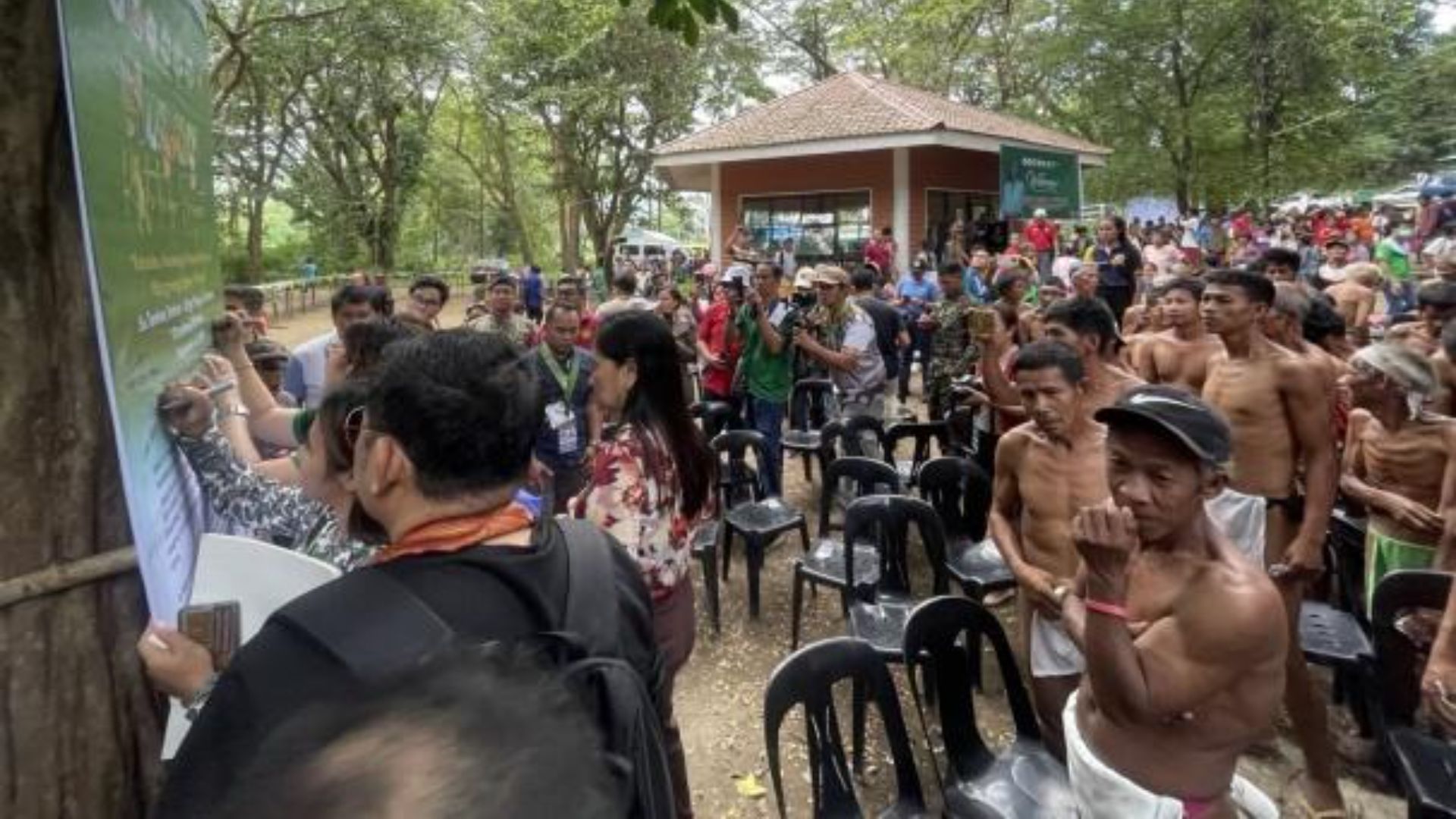
The Hapag Katutubo (HK) launching was participated in by the Thriving Together with Tamaraw Consortium team as part of its commitment to support Indigenous Peoples (IP) communities. HK is a nationwide initiative of the National Commission on Indigenous Peoples (NCIP) aimed at addressing poverty and malnutrition through sustainable food production in ancestral domains.
The program envisions portions of ancestral lands being transformed into “food baskets” in Sitio Tamisan, Barangay Poypoy, Sablayan, Occidental Mindoro, this means using around 20,000 hectares of the Taobuid Ancestral Domain (which spans over 70,000 hectares in total) for planting fruit trees and vegetables. Due to limited resources and staff, NCIP has been actively reaching out to other government agencies and civil society groups for support. During the launch, various agencies provided services to the community, including:
- National ID registration (PSA)
- PhilHealth membership
- Free check-ups and medicines through a medical mission
- Introduction of an irrigation project by the NIA
- Distribution of food packs and seedlings
- Provision of farming seeds from the DA
A message of support was delivered by the project, highlighting its focus on Tamaraw conservation and the preservation of Indigenous knowledge systems—both recognized as critically endangered and deserving of urgent attention.
A ceremonial Fangalga ritual was held, where a white chicken was offered and its blood dripped onto a wooden structure called the Sangaan. The ritual, led by Fagtainan Artemio Sagun and Eddie Calabio, served as a spiritual blessing for the HK project. The message was clear: the ancestors approve.
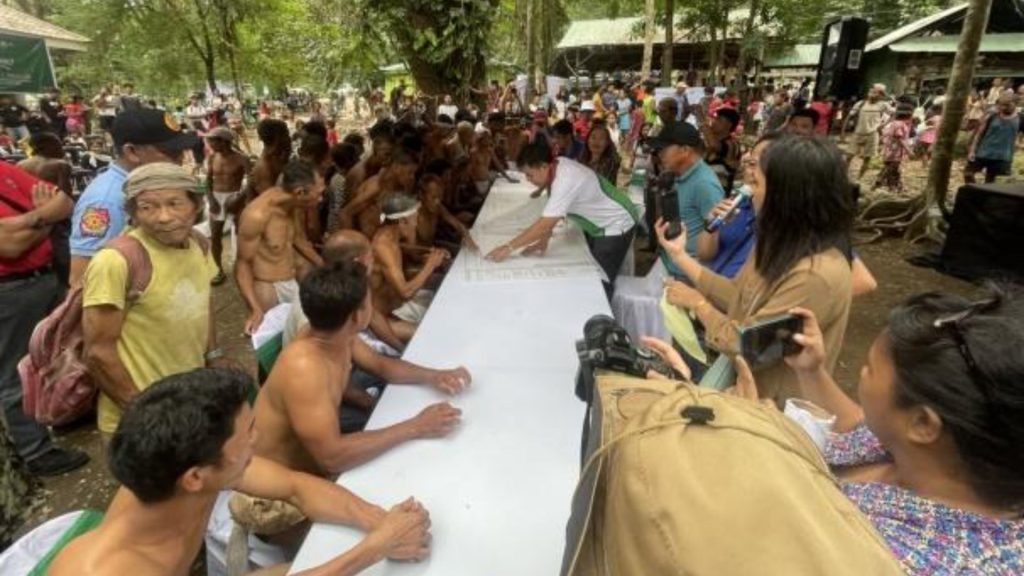
CENRO Sablayan provided the seedlings for the tree planting activity that followed, where cashew, jackfruit, marang, and bamboo were planted near the Tamisan Elementary School. Additionally, over ten 25-kg sacks of corn seeds were turned over to the IP community for distribution, with their leaders helping manage the process. Another highlight of the day was the formal signing of the Taobuid Ancestral Domain (AD) map, a major step toward securing their Certificate of Ancestral Domain Title (CADT).
Support for the project was affirmed by numerous agencies and groups. These included the Department of Education, Department of Agriculture, Philippine Army, PhilHealth, Philippine Statistics Authority, Department of Social Welfare and Development, and many others.
Through the Hapag Katutubo program, collective efforts are being mobilized to help IP communities grow their own food, strengthen their cultural practices, and work toward long-term food and land security. The project remains committed to supporting these goals in ways that uphold both biodiversity and Indigenous heritage.